Julien's Auctions · Sale 428 · Lot 1159
STAR WARS - A NEW HOPE: STORMTROOPER HELMET
Photographs: © Julien's Auctions
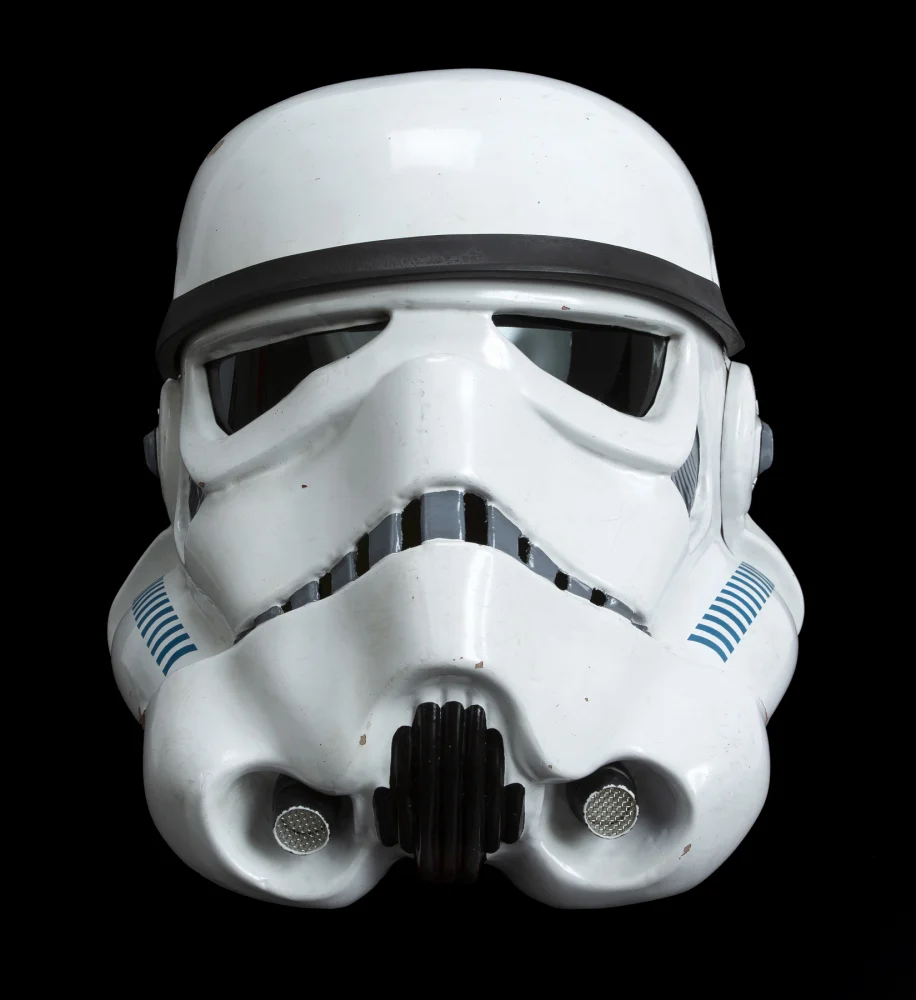
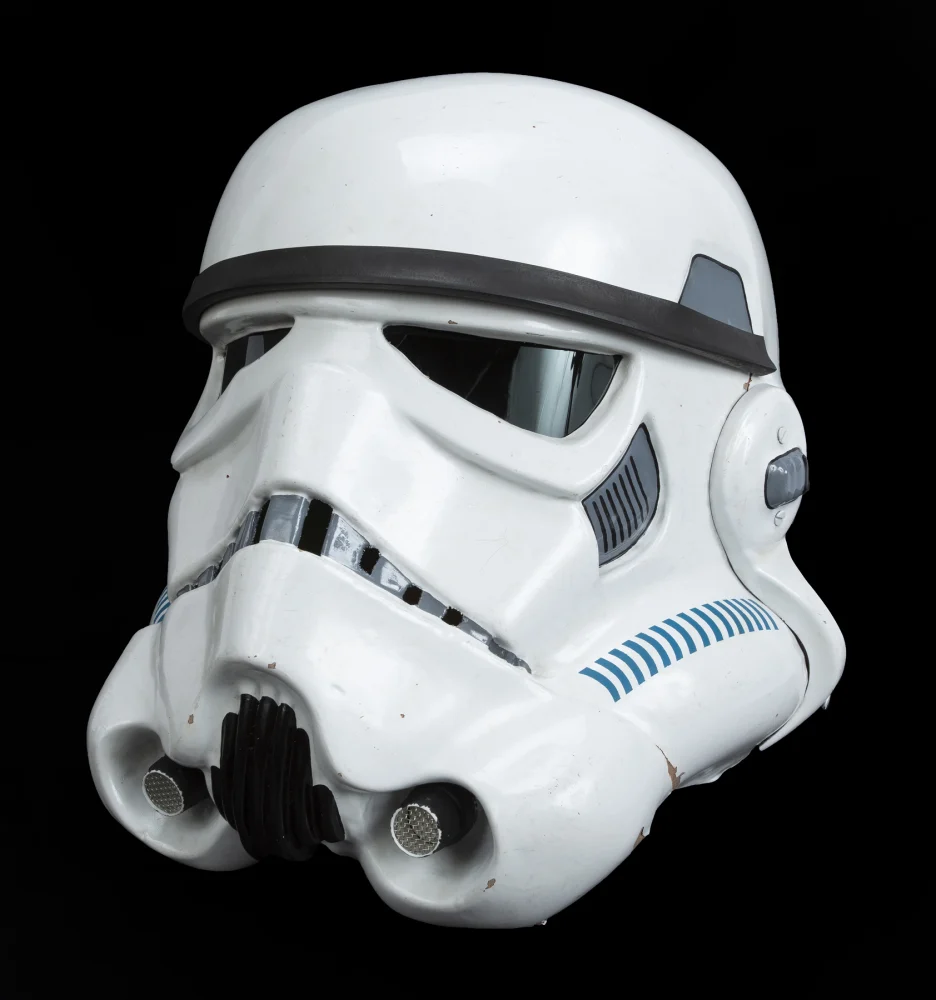
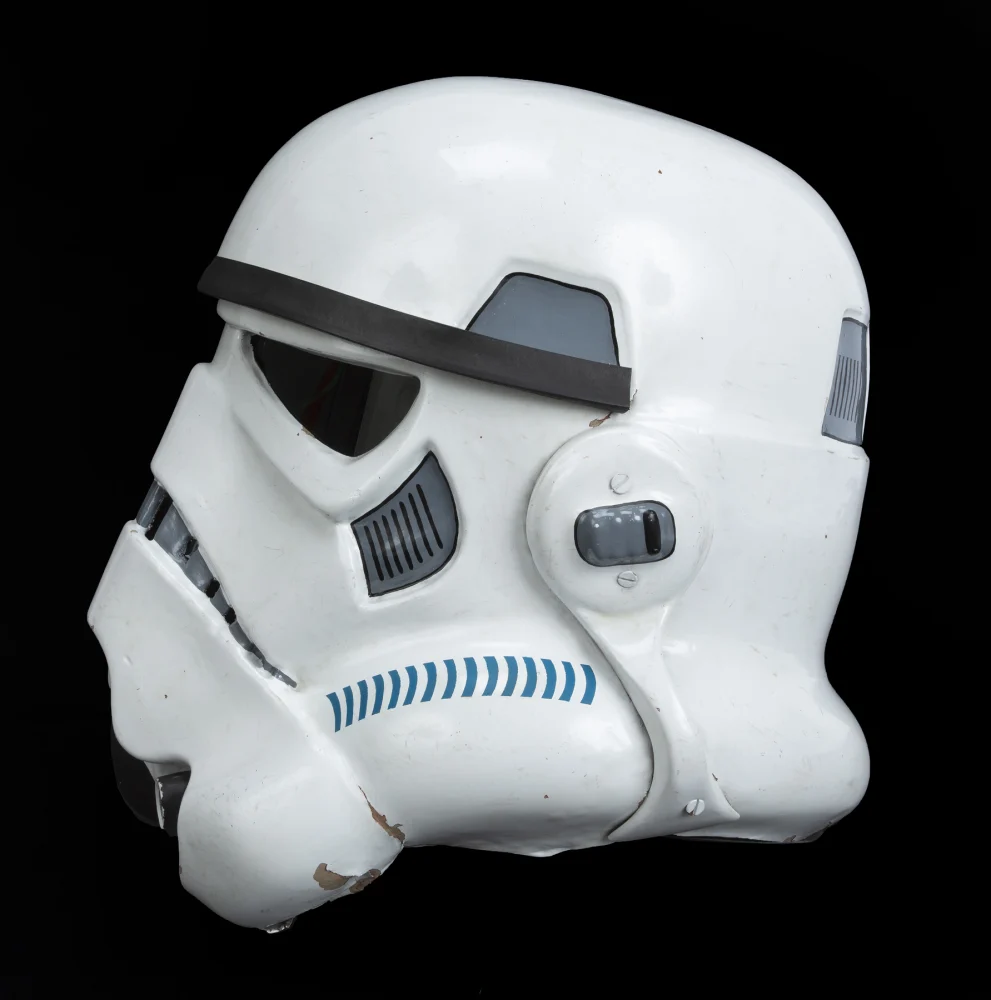
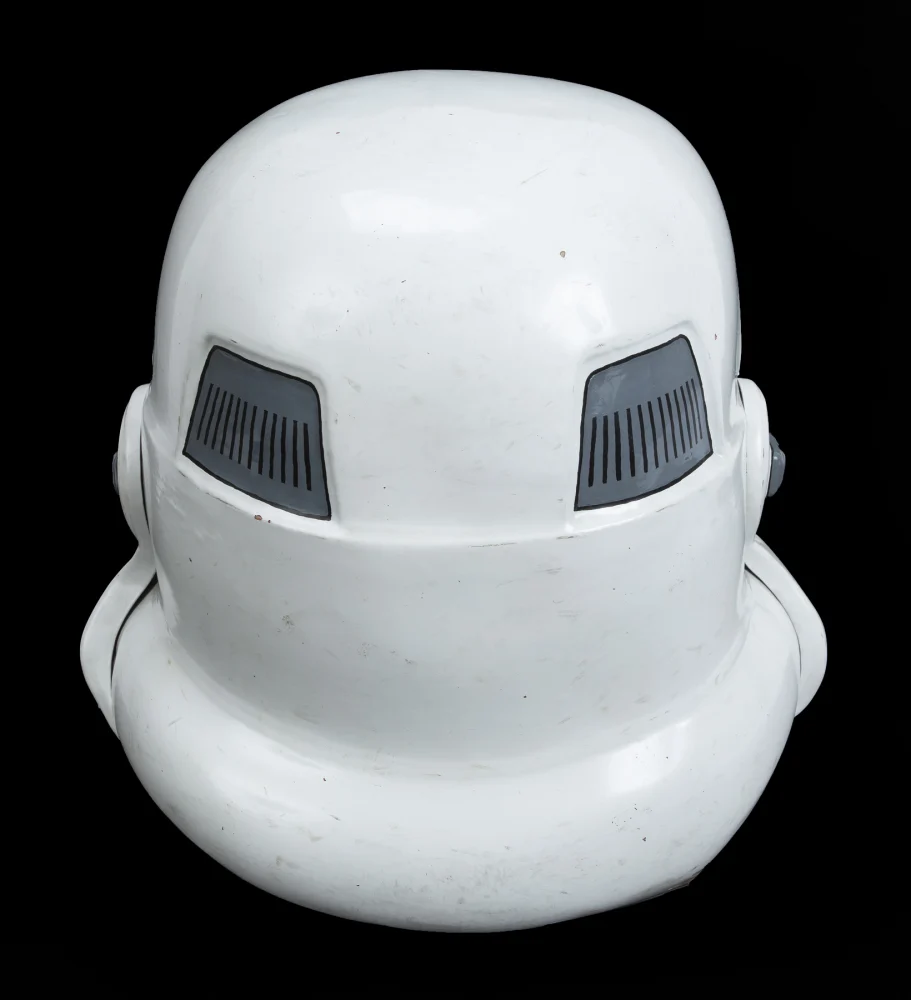
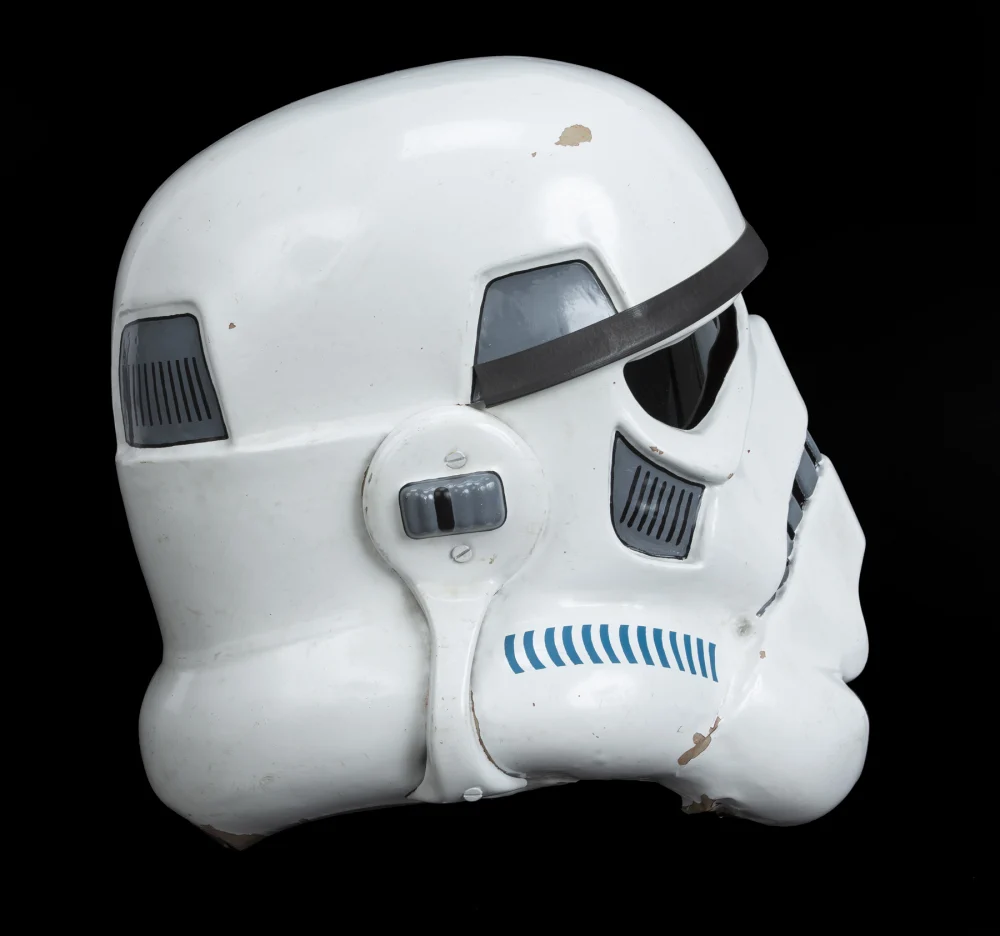
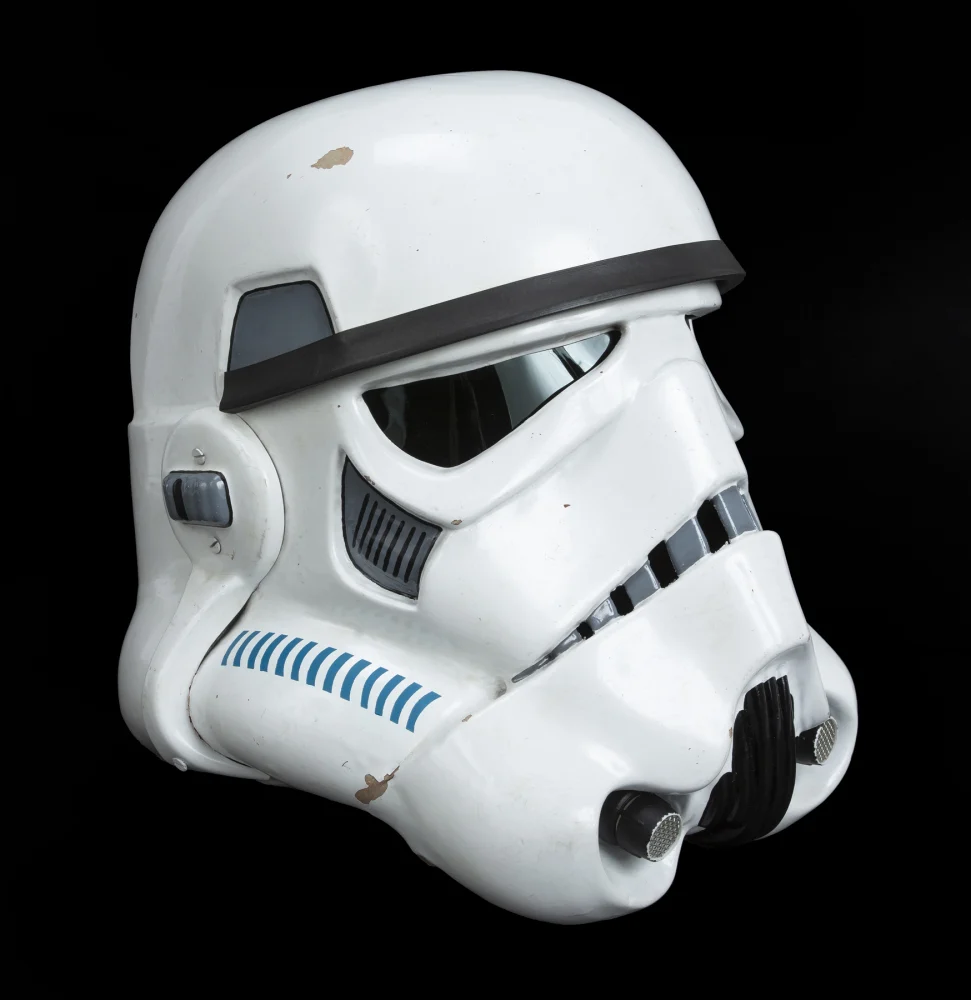
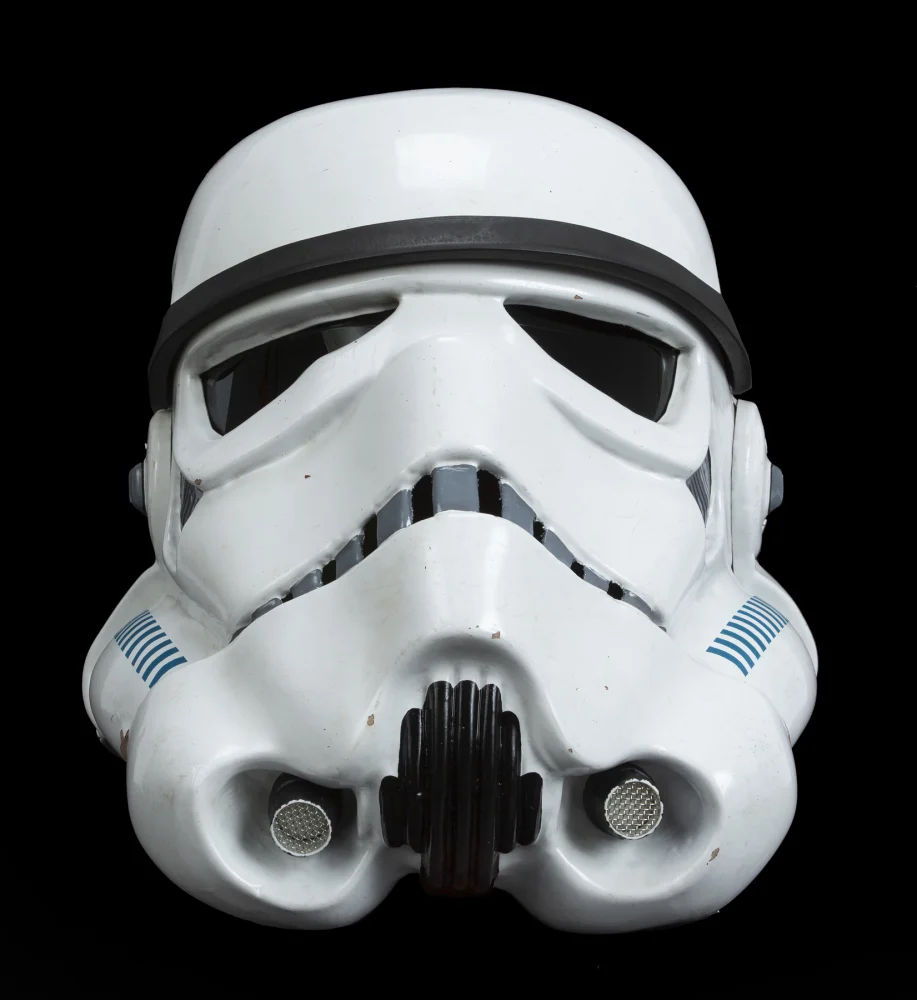
An original Stormtrooper helmet made for and used in Star Wars: Episode IV - A New Hope (Lucasfilm Ltd., 1977).
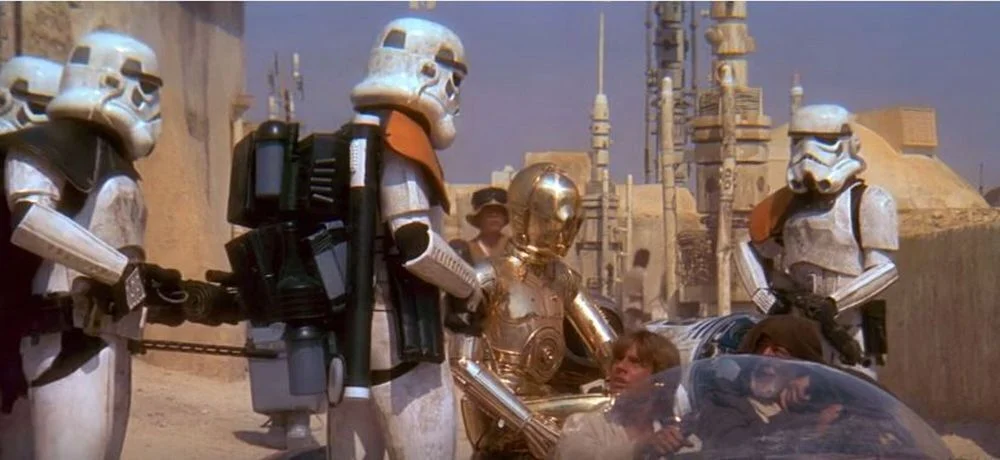
This helmet is believed to have been one of the original six Sandtrooper helmets made for the 1977 blockbuster film that began the Star Wars phenomenon. The first memorable reveal of a Stormtrooper seen in the opening sequence of Star Wars: A New Hope on the desert planet of Tatooine, were the "Sandtroopers." This particular helmet is believed to be featured in scenes on Tatooine, and as such would be considered a "stunt" or "Sandtrooper" helmet (though some helmets from Tunisia were later reused on other sets for non-Tatooine scenes). Based on analysis of the shape of the helmet, unique details around the ears and teeth cut outs and comparing to those unique six helmets featured in those scenes, it is believed that this is a helmet that was used for the film.
It has also been surmised by Star Wars historians and Julien's in-house Hollywood memorabilia experts that this particular helmet may have been worn by the third Stormtrooper guard from the left, escorting Princess Leia to be confronted by the ominous Darth Vader, on the captured Rebel Blockade Runner seen in Star Wars: A New Hope .
This specific example was gifted to a film crew member who worked on Star Wars: Episode V - The Empire Strikes Back (Lucasfilm Ltd., 1980).
The Stormtroopers were conceptualized by George Lucas to appear intimidating to movie audiences. One of the primary goals in the design was to completely hide what kind of lifeform was beneath the armor, so that movie goers would also find the Stormtroopers intriguing and somewhat mysterious. With this goal in mind, Andrew Ainsworth was faced with the challenge of fabricating the homogenous armor with strategic undercuts in order to completely disguise the wearer of the costume.
On February 19th, 1976 John Mollo placed an order with Nick Pemberton for "50" Stormtrooper helmets and "40" Rebel Pilot (X Wing) helmets.
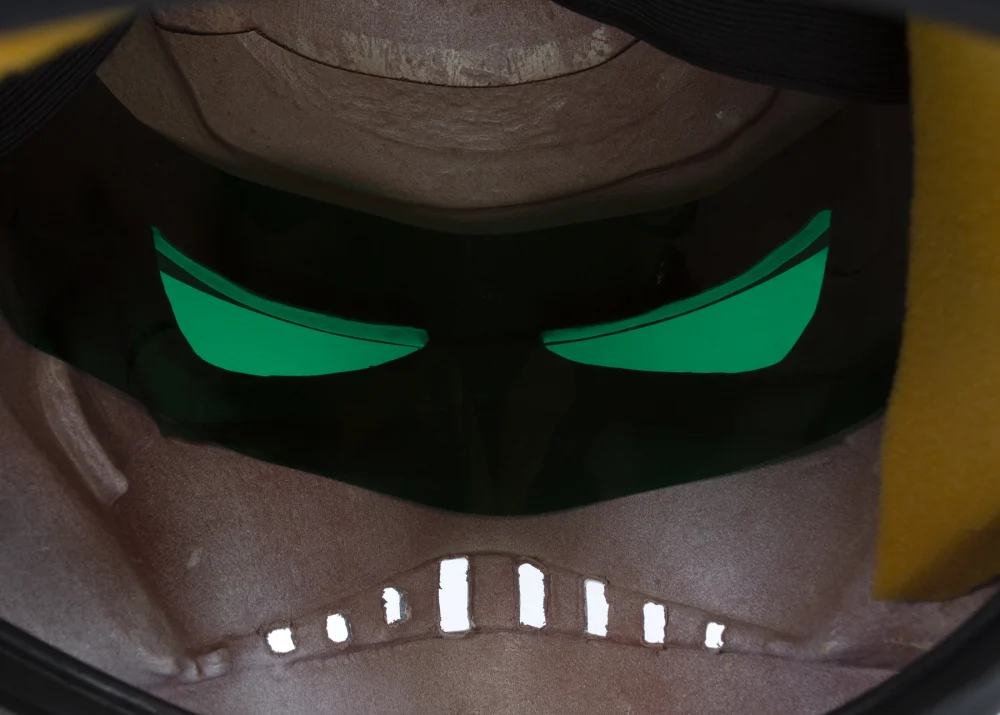
Due to the unpredictable vacuum forming casting methodology employed by Shepperton Design Studios when fabricating the Stormtrooper helmets for Star Wars, and the face's eyes and "teeth" needing to be hand-cut, one at a time, each helmet resulted in unique and distinctive individualized facial features. These features have historically become determining factors in authenticating original screen-used Stormtrooper helmets.
After extensive research, examination and analysis conducted by leading Star Wars helmet authentication experts who have consulted with Lucasfilm Archives, as well as Julien's in-house Hollywood memorabilia specialists, it has been determined that this helmet is an original stunt helmet used during the production of Star Wars: A New Hope .
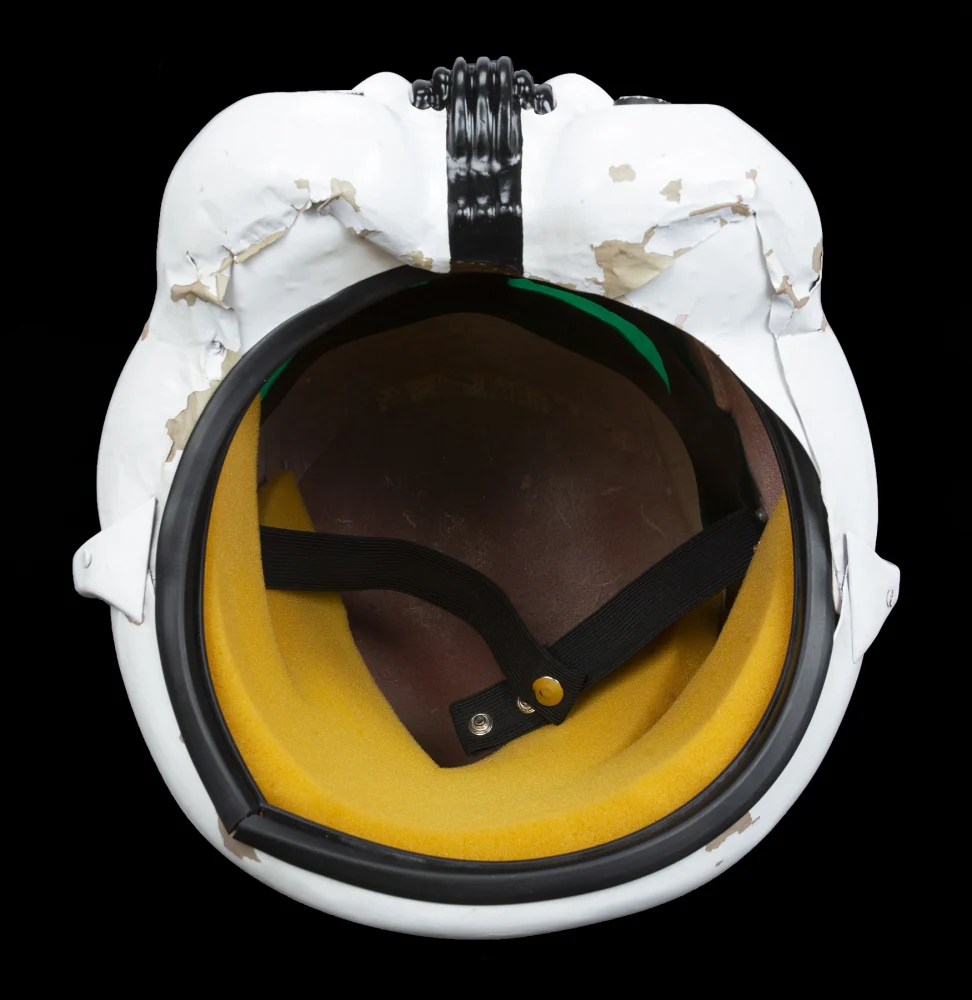
The material used on this specific helmet is the original, vintage, khaki-green HDPE (High Density Polyethylene) vacuum formed plastic material used by Shepperton Design Studios in 1976. During its restoration, this helmet also exhibited the original off-white / ivory white colored paint utilized during its original fabrication at Shepperton Design Studios within its crevices.
Only "6" of the "50" stunt helmets are known to have survived and are accounted for in private collections - this being one of the six.
Renowned Star Wars historian, motion picture prop & wardrobe restoration expert and artisan Gino Sabatino was retained to complete the museum level project. For many years Sabino had painstakingly and extensively researched and examined original screen used Star Wars helmets (including those worn by Stormtroopers) by being provided direct access to the Lucasfilm Archives and private collections, and had advised official Star Wars licensees when it came to areas of authenticity and accuracy.
This helmet had previously undergone some form of apparent restoration at one point, following the production of Star Wars: A New Hope, but not to its full potential. It was meticulously brought back down to its original muted khaki-green HDPE (High Density Polyethylene) vacuum-formed plastic components produced during the pre-production of Star Wars and underwent a complete and more faithful restoration.
During the original rushed construction of this specific helmet in 1976 at Shepperton Design Studios the vacuum formed plastic faceplate was cast thin and two sections had been constellated and were subsequently trimmed, either prior to production by an artisan at Shepperton Design, the Star Wars Art Department or the Costume and Wardrobe Department, or some point later, which resulted in spacing that required a stabilizing plate to be installed, which was cast from a mold taken directly off of another screen-used stormtrooper helmet faceplate.
The faux ear communication devices on either side of the helmet, also cast from molds taken directly off of an original screen-used helmet ears, were affixed akin to the originals.
The helmet was then custom sprayed with red primer which was matched from an original paint sample. Next the recognizable off-white / ivory white painted topcoat, also as per the originals, was applied. Authentic hand-painted details, based upon those featured on original screen-used helmets preserved in the Lucasfilm archives and in private collections, were added. Using matched paint samples, this detailing was meticulously added to the exterior of the helmet, including on the vocoder direct speaker, "teeth" and frown area (natural air vent), temples and rear of head "traps" (faux heat dispersion vents and osmotic filters) and "tears" (faux heat dispersion vents located under the eyes), and tube striping (simulated exhaust filters), and on the auditory sensors located on the center raised portion of either ear.
Proper helmet accessories were installed next, including screen accurate black rubber brow & neck trim, aerator "Hovi Mix Pa2" mic tips cast off a vintage original. authentic green acetate gel lens material placed in the eye area, accurate elastic chin straps and micro-foam lining was methodically installed within the interior of the helmet.
In the last phase of the restoration the helmet was purposely and carefully weathered by Sabatino to exhibit faux paint touch-up, simulated minor paint chipping, and purposeful distressing from implied handling, in order to create a proper and authentic historic look. As the restoration artist explained: "it was crucial the aging had to appear natural.
This stormtrooper helmet's current display state represents what the helmet would look like today if more carefully preserved over the past 45 years.