Julien's Auctions · Sale 428 · Lot 1117
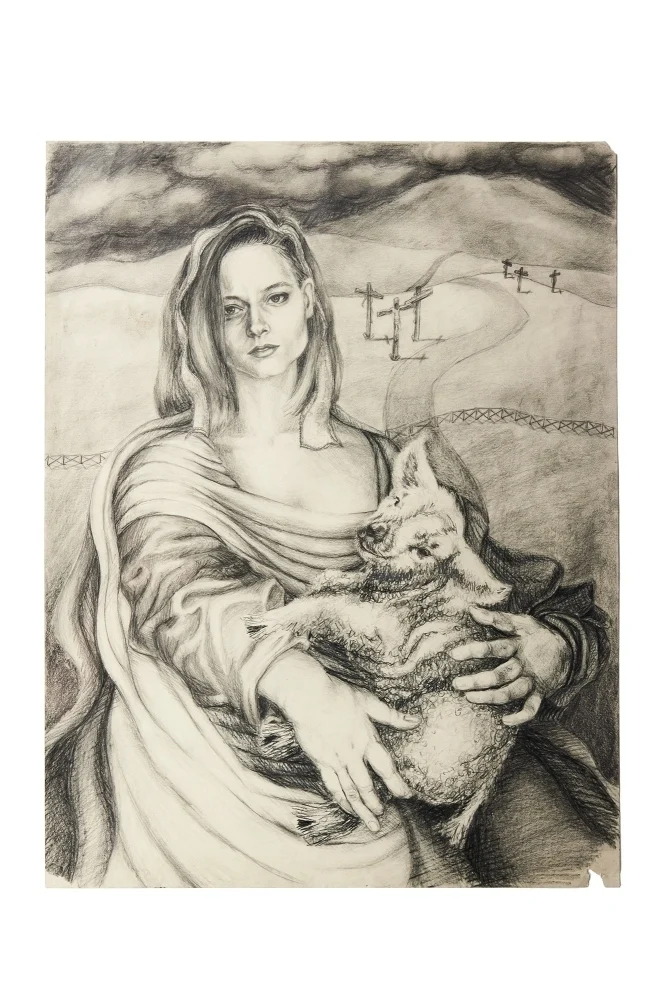
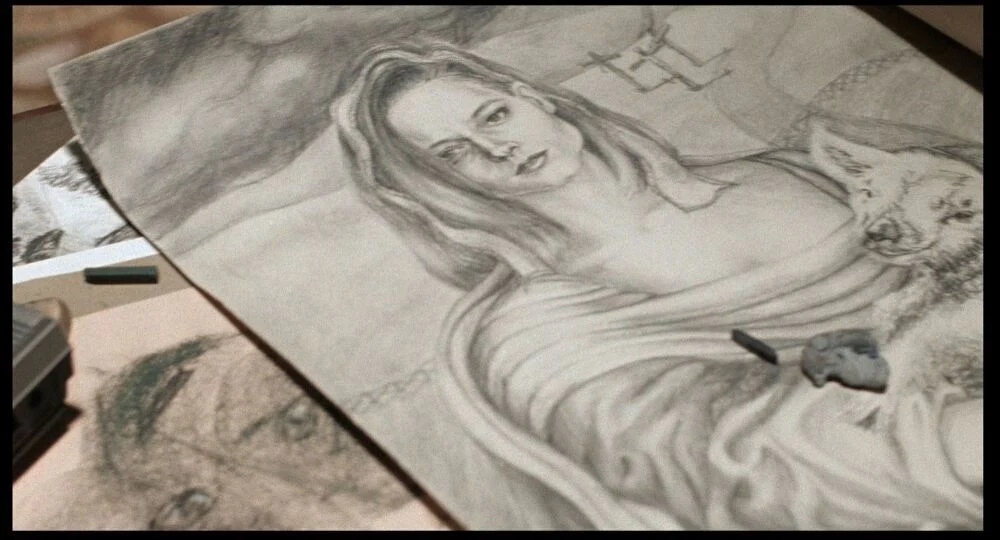
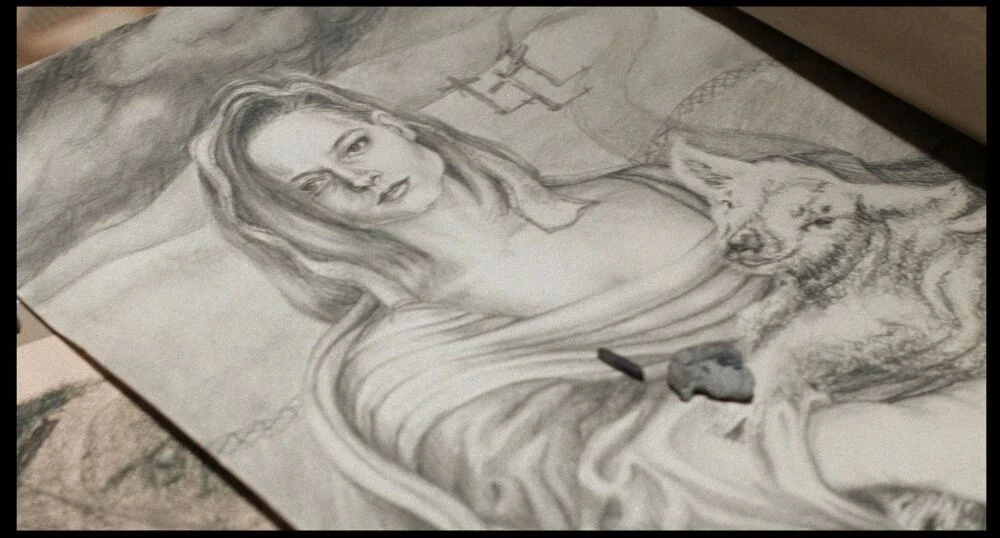
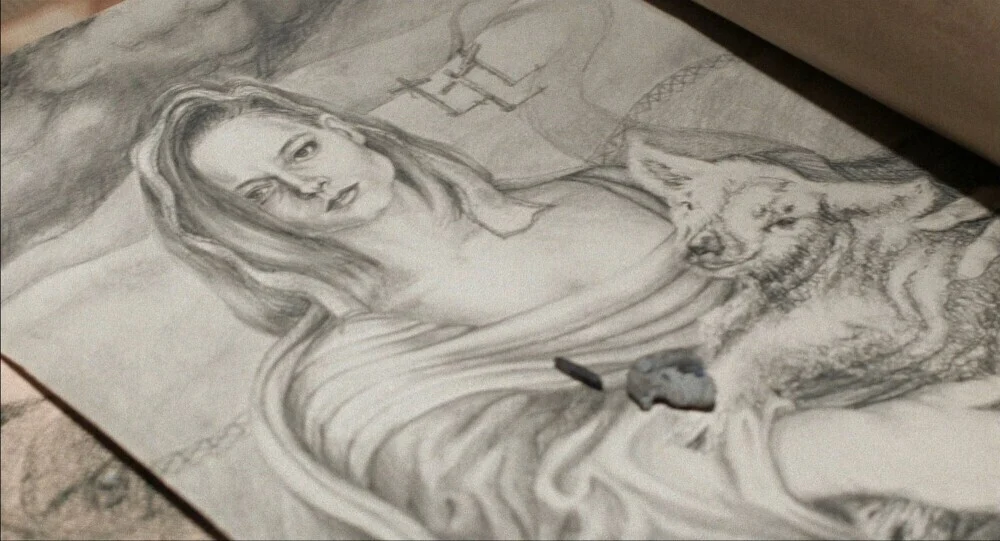
PAULA PAYNE: "THE SILENCE OF THE LAMBS" ORIGINAL "HANNIBAL LECTER" CLARICE WITH THE LAMB ILLUSTRATION (WITH DVD)
Photographs: © Julien's Auctions
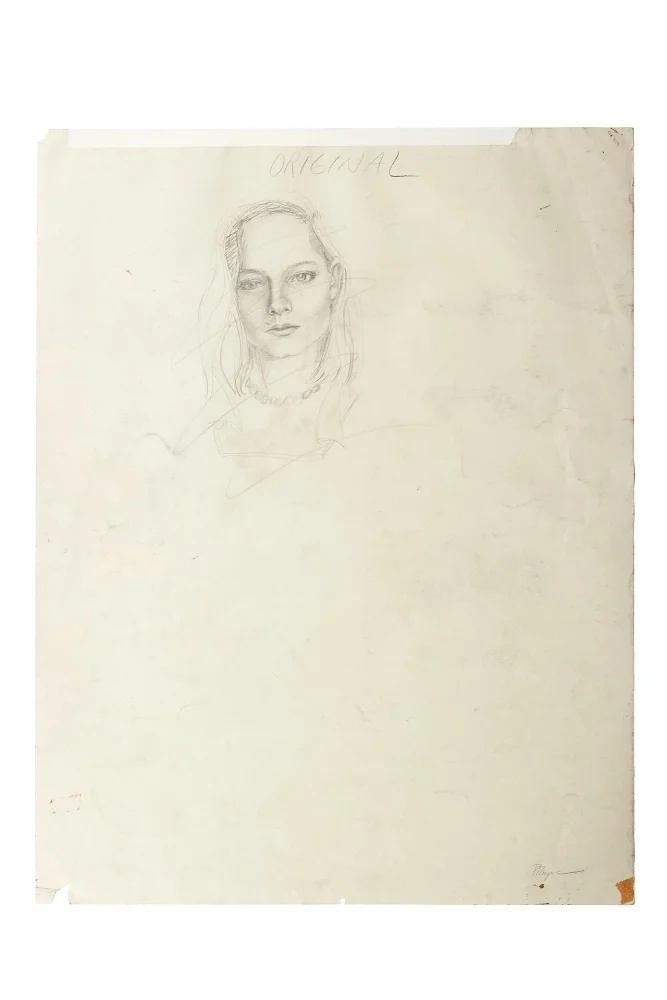
An original charcoal and pencil on paper illustration titled "Clarice with the Lamb," composed by on-set scenic/character artist Paula Payne for the production of Jonathan Demme's classic film The Silence of the Lambs (Orion Pictures, 1991), with the verso featuring a "crossed out" pencil illustration of Foster's face and neck clad in a necklace, likely a partial draft of the image, with "ORIGINAL" written top center in Payne's hand. In the film, the illustration is described as the work of the character Dr. Hannibal Lecter, (Anthony Hopkins) an incarcerated cannibal psychiatrist.
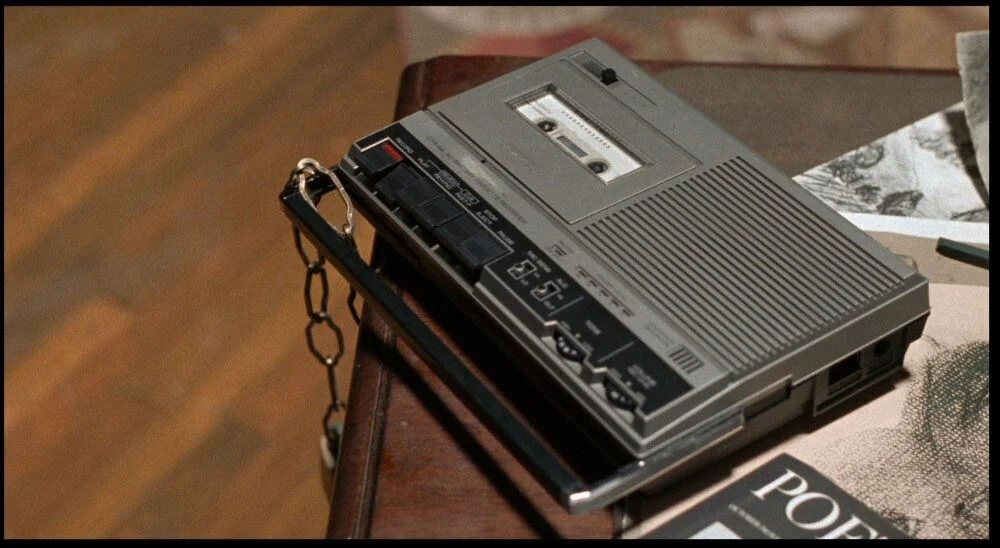
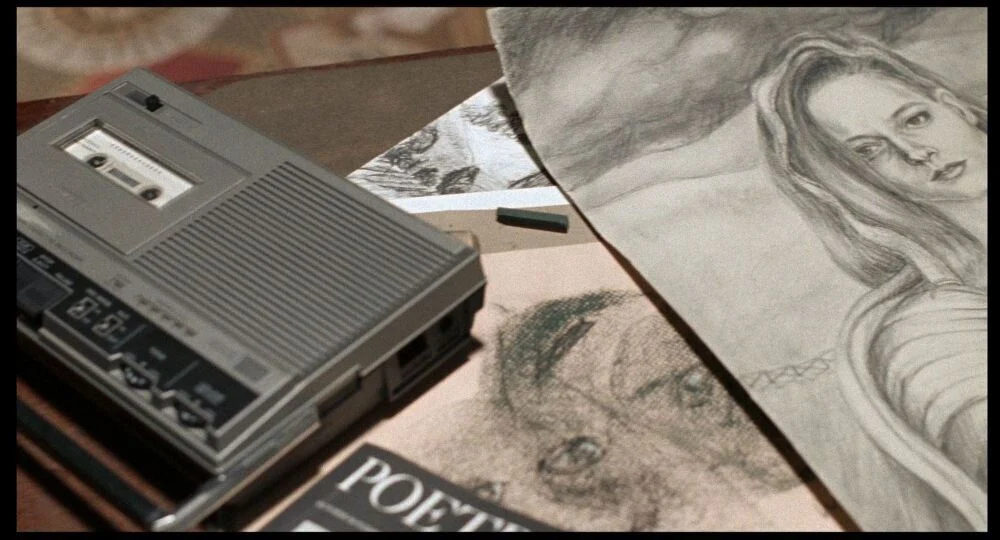
The illustration, one of the most iconic props in the film, appears at the opening of the shocking sequence in which Lecter brutally murders two police officers and escapes from his prison cell in Washington, DC. Payne states:
"There were three identical drawings of 'Clarice with the Lamb,' the one you see here, and two stunt doubles for extra takes of a blood spatter scene. The extra drawings no longer exist."
Payne's illustrations illuminate Lecter's inner world, and become a meaningful part of his fraught relationship with FBI trainee Starling (Jodie Foster), who aims to use his knowledge to find a murderer on the loose. When they first meet, Starling asks if he drew one of his pieces from memory, and he says, "Memory, Agent Starling, is what I have instead of a view." He values the illustrations for helping him, an aesthete, escape from his bare cell.
The appearance of this illustration of Clarice later in the film suggests she has become a cherished part of his internal life. It references a climactic moment in their relationship, when Clarice (whose mentor has warned her never to tell Lecter anything about herself and "let him in") confesses she ran away from her adopted guardian's ranch after awakening one night to hear lambs screaming, and crept outside to see them get slaughtered. Horrified, and unable to free them all, she took one and ran away. She was found by police and sent to an orphanage, while the lamb was killed. Lecter infers that her traumatic inability to save the lamb has informed her determination to become an FBI agent and, particularly, to save Catherine Martin, a kidnap victim who is sure to be murdered if the FBI can't get to her in time.
Lecter's depiction of Clarice as an angelic "Mother Mary" to the lamb suggests Lecter holds her on a religious pedestal. He is drawn to, and identifies with, her passionate desire to fulfill her inner drives - even if his inner drives, to manipulate, murder and eat people, are very different (indeed, shortly after the audience sees this illustration for the first time, Lecter orders "very rare" lamb for dinner).
Lecter's portrait of Clarice is further darkened by its background, a long path heading into ominous hills, lined with crucified people. The image, like Lecter's exchanges with Clarice, suggests that her life's work as an FBI agent will never relieve her of her deepest trauma, or stop the murder of the innocent. After she's saved Catherine and successfully earned her Special Agent status, the escaped psychopath calls her at her graduation party and asks:
"Well Clarice, have the lambs stopped screaming?"
This item is accompanied by a DVD of the film.
Dimensions: 26 x 20 inches
Provenance
From The Paula Payne Collection